
Business · Style Journal 08 / 12
Modern Business Dressing
Offices have changed; standards have not disappeared. How to dress with authority in today's workplace.
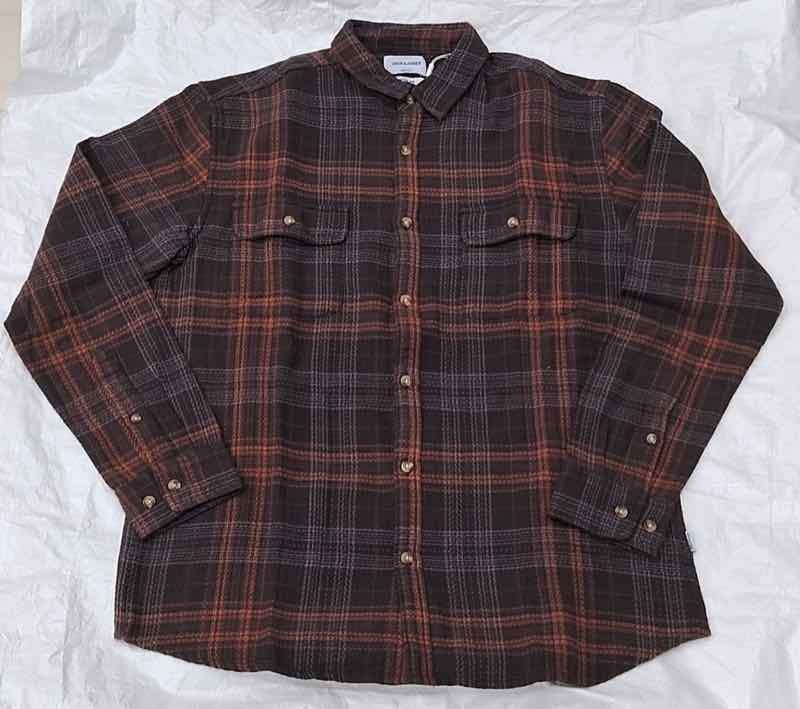
The suit-and-tie office has not vanished, but it is no longer the only model. Today a man may present to a board in the morning, work from a shared studio in the afternoon and meet a client over dinner, all on the same day and often in the same clothes. Modern business dressing is the art of looking appropriate across that whole spectrum — and the formal shirt sits at the centre of it.
What has changed, and what has not
The broad shift is easy to describe. Ties appear less often, jackets are worn by choice rather than by rule, and many workplaces now describe their standard simply as "business casual". In India, where the climate has always made the full suit a demanding garment for much of the year, that change has felt especially natural. Plenty of offices in Mumbai, from financial firms in Bandra Kurla Complex to agencies in Andheri, now run on a shirt-and-trouser standard with jackets kept for meetings.
What has not changed is the underlying expectation. People still read clothes, and they still read them quickly. A well-fitted, well-pressed shirt signals preparation and respect for the people in the room; a creased, ill-fitting one signals the opposite, regardless of what the dress code says. The relaxation of rules has, if anything, made judgement more important. When everyone wore the same uniform, there was little to get wrong. Now there is a great deal of choice, and choice reveals taste.
The rules have loosened; the scrutiny has not.
Understanding the dress codes
Office dress codes are rarely written down precisely, so it helps to think of them as a scale rather than as fixed categories.
Business formal
The traditional standard: a suit or a jacket with matching trousers, a tie, and a plain or finely striped shirt in white or light blue. Collars are point or semi-spread, cuffs are buttoned or French, and shoes are black or dark brown lace-ups. This is the code for board meetings, regulatory hearings, major presentations and most first interviews in banking, law and consulting.
Business professional without the tie
Perhaps the most common standard in Indian offices today. The jacket is optional, the tie is absent, and the shirt carries the weight of the outfit. A crisp shirt with a collar that stands up well on its own — a semi-spread with firm interlining, or a neat button-down — becomes essential, because without a tie a weak collar collapses under the jacket lapel.
Business casual
Chinos or cotton trousers, shirts in oxford or textured cottons, and room for pattern: checks, stripes in bolder colours, and smart half-sleeve shirts in some workplaces. This is where much of the modern working wardrobe now lives, and where the most mistakes are made, because "casual" is too often taken literally.
The shirt as the foundation
If the jacket and tie are now optional, the shirt is not. It is the one garment visible in every meeting, every video call and every photograph, and men's office shirts therefore deserve more thought than any other part of the working wardrobe.
- Fit first. Shoulder seams should sit at the edge of the shoulder, the collar should close without pinching, and the body should follow the torso without pulling at the buttons. A shirt that fits is more professional than an expensive one that does not.
- Collar structure. Without a tie, the collar does the framing. Choose collars that hold their shape and points that sit neatly under a jacket.
- Colour discipline. White, light blue and fine stripes cover the formal end; soft pink, lilac and pale grey extend it; checks and deeper colours take you into business casual.
- Fabric suited to the day. Poplin for polish, twill for richness and crease resistance, oxford for relaxed days, and breathable cottons and linen blends for the hottest months.
For a deeper look at how silhouettes differ, our page on shirt fits and tailoring explains slim, regular and tailored cuts, while business and office shirts sets out the core styles for the working week.
Where checks belong in business dressing
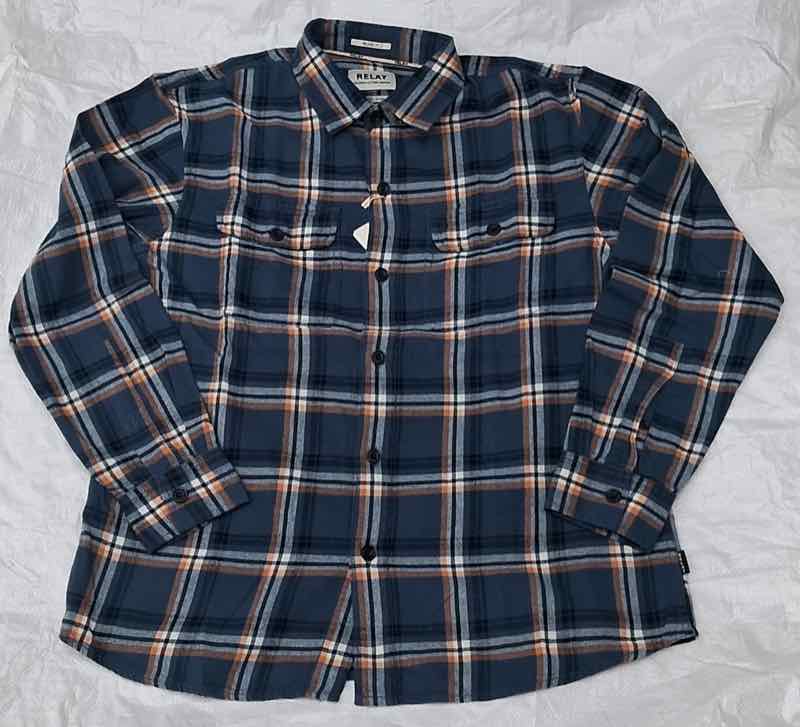
A check shirt with flap pockets — rust and navy, say, or navy with rust — is a useful case study in modern business dressing, because it sits right on the line between formal and casual. The pockets, the stronger colour and the scale of the check all push it towards the weekend. Yet worn tucked into navy or charcoal trousers, with a slim leather belt and polished brown shoes, it becomes entirely appropriate for a Friday at most offices, a creative pitch, an informal client visit or a day of site meetings.
The trick is to keep everything around the shirt formal. A bold check worn with chinos, trainers and an untucked hem reads as off-duty. The same shirt worn with tailored trousers, a structured unlined jacket in navy or grey, and proper shoes reads as a confident, contemporary business look. Pick the jacket colour from the check — navy from a navy-and-rust pattern is the obvious move — and the outfit will hold together naturally.
What such shirts should not replace is the plain shirt for occasions that carry weight. A tender presentation, a disciplinary meeting or a first meeting with a senior client calls for white or blue. Business dressing is ultimately about reading the room before you enter it.
Layering in a warm city
In Mumbai, layering is less about warmth and more about adaptation. The outdoors is hot and humid for most of the year; the indoors can be cold enough under strong air-conditioning to make a jacket welcome. The modern answer is the unstructured jacket: little or no lining, soft shoulders and a breathable cloth such as cotton, linen blend or tropical-weight wool. It can be carried over the arm on the street and put on at the office door.
Under it, the shirt should be light enough to breathe and substantial enough not to turn translucent. A fine twill or a good poplin does both. In the monsoon, choose fabrics that dry quickly and do not show water marks readily; darker trousers help too, since a sudden downpour between car and lobby is part of the Mumbai working day from June to September. Keep a spare shirt at the office during those months — it costs nothing and has rescued many important afternoons.
Dressing for the screen
A significant share of business now happens on video calls, and the camera has its own preferences. Solid mid-tones and soft colours — light blue, pale grey, muted pastels — read best on screen. Very fine stripes and tight micro-checks can shimmer or flicker on camera, and pure white can glare under strong lighting, especially against a darker background. The collar matters more than ever because it is often the main thing in frame; a limp collar looks worse at close range than it ever would across a table.
It is worth treating a video presentation exactly like an in-person one. Wear the full shirt, pressed, and tuck it in. People sit differently, speak differently and carry themselves differently when they are properly dressed, and that shows in the voice as well as on the screen.
The details that carry authority
With fewer garments in play, small details do more of the work. Sleeves should end at the wrist bone so that a little cuff shows beneath a jacket — roughly a centimetre is the classic measure. Shirt cuffs should close snugly enough not to slide over the hand. A fine cotton undershirt in a skin tone, rather than white, stays invisible under a light shirt and absorbs perspiration before it reaches the outer fabric, which is a genuine advantage in humid weather. Collar stays keep points straight; a watch with a slim case slips under a cuff rather than fighting it.
None of these details will be consciously noticed by a colleague or client. Together, though, they produce the impression of a man who has thought about how he presents himself, and that impression is exactly what modern business dressing is for.
A modern working wardrobe
Putting this together, a man working in a typical Mumbai office might build around the following:
- Three or four plain shirts in white and light blue for formal days and important meetings.
- Two fine stripes or subtle textures for the middle of the week.
- Two smart checks or deeper colours for Fridays, informal meetings and travel.
- Trousers in navy, charcoal and mid-grey, with one stone or olive pair for relaxed days.
- One unstructured navy jacket and, if the role demands it, one dark suit.
- Black and dark brown leather shoes, with matching belts.
That collection covers business formal, business casual and everything in between, and it rewards care far more than quantity. Our journal piece on building a professional shirt wardrobe develops the idea in more detail.
The best business shirts for men are the ones that let you stop thinking about clothes once you are dressed. If you are refreshing your working wardrobe, visit Options Mall in Juhu, Vile Parle West, to explore formal and business shirts, try fits in person and compare collars and fabrics side by side.