
Material · Style Journal 04 / 12
Understanding Men’s Formal Shirt Fabrics
Poplin, oxford, twill, linen and blends — what each weave does, how it feels, and when to wear it.
Colour catches the eye, but fabric decides how a shirt actually lives: how it breathes on a humid afternoon, how it drapes under a jacket, how it creases on the commute and how it looks after a hundred washes. Learning to read cloth is the most valuable skill a man can develop when choosing men's formal shirts, and in a climate like Mumbai's it is not a refinement but a necessity.
Fibre, yarn and weave
Three things determine how a shirting fabric behaves. The fibre is the raw material: cotton, linen, or a synthetic such as polyester. The yarn is how that fibre is spun, finer or coarser, single or two-ply. The weave is how the yarns interlace on the loom, and it is the weave that gives poplin, oxford and twill their distinct characters even when all three are pure cotton.
Cotton dominates formal shirting for good reason. It is breathable, absorbs moisture, is comfortable against the skin and takes colour well. Longer cotton fibres can be spun into finer, smoother, stronger yarns, which is why shirts made from them feel silkier and wear better. Two-ply yarns, where two fine threads are twisted together, generally produce a more durable and substantial cloth than single-ply yarns of the same fineness.
You will sometimes see shirting described by a yarn count, a number such as 80s, 100s or higher. The count describes the fineness of the yarn: the higher the number, the finer the thread and, usually, the smoother and lighter the cloth. Finer is not automatically better, however. Very fine fabrics feel luxurious but can be more delicate and crease more easily, while a moderate count in a good two-ply construction often makes the more practical everyday shirt. Think of yarn count as one clue among several, never as the whole story; the hand, the weave and the finish matter just as much.
The principal weaves
Poplin
Poplin, sometimes called broadcloth, is a plain weave: each yarn passes alternately over and under the next. The result is smooth, flat, cool and lightly lustrous. It is the classic cloth of the business shirt, sharp under a suit and easy to press. Fine poplin is the most dependable choice for white formal shirts and blue formal shirts meant for the office. Its only weakness is that it shows creases readily.
Twill
Twill weaves create fine diagonal lines across the surface. The structure makes the cloth softer, more fluid and naturally resistant to creasing, with a subtle sheen that looks rich in darker colours. Herringbone is a twill variation in which the diagonal reverses to form a chevron. Twill is an excellent choice for long days and travel, and it drapes beautifully under a jacket for evening events.
Oxford and pinpoint
Oxford cloth uses a basket weave, with groups of yarns crossing together, and often a coloured yarn woven with a white one to produce a gently mottled look. It is thicker, more textured and more casual than poplin, and it improves with age. Pinpoint oxford uses finer yarns for a smoother, dressier surface, bridging the gap between oxford and poplin.
End-on-end and chambray
End-on-end alternates coloured and white yarns in one direction, creating a fine, almost speckled texture that reads as a solid colour from a distance but has depth up close. It is light and breathable, and particularly attractive in pale blue. Chambray, woven with a coloured warp and white weft in a plain weave, looks rather like a lightweight denim and sits on the casual side of the office.
A good shirting fabric should feel cool and dry in the hand, never slippery or waxy.
How to judge fabric by touch
You can learn a great deal about a shirt in thirty seconds of handling it. When you examine fabric, try these tests:
- Rub it between thumb and finger. Good cotton feels smooth and slightly cool. A harsh, papery feel or a slippery, plastic quality often indicates coarser fibres or a heavy synthetic content.
- Hold it to the light. The weave should look even, without thick and thin patches. Fine fabrics may allow some light through, which is normal, but the density should be consistent.
- Crush a corner in your fist. Hold it for a few seconds, then release. Twill and blends will recover with fewer creases; poplin and linen will show more. Neither is wrong, but you should know what you are choosing.
- Feel the weight. Lighter fabrics suit Mumbai's long summer and the humid months. Heavier oxfords and twills are better suited to air-conditioned offices and the cooler weeks of the year.
- Look at the collar and cuffs. Check that the fabric lies smoothly over the interlining, without bubbling.
Denim and the casual end of the spectrum
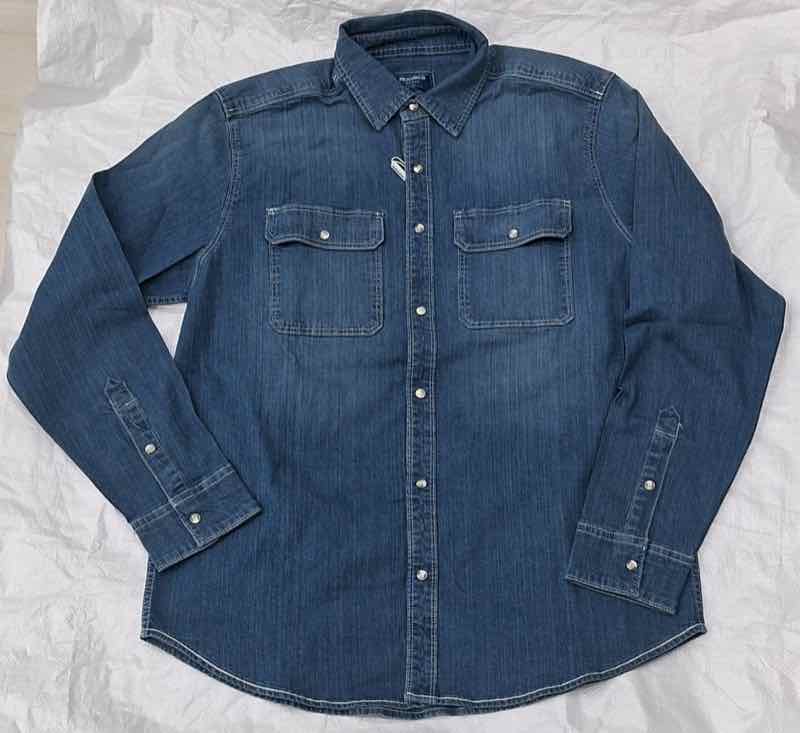
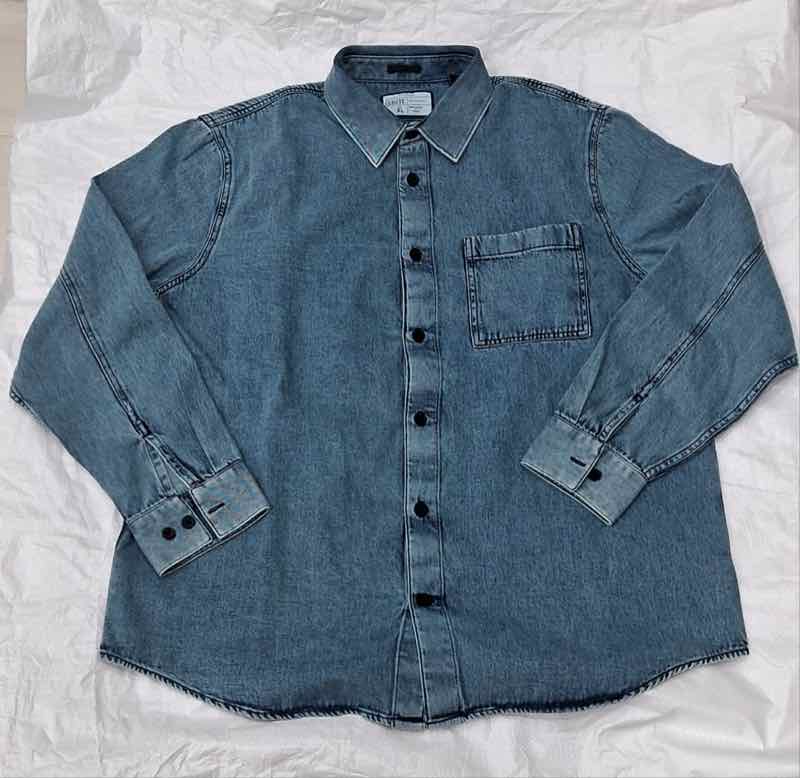
The two shirts shown with this article are a mid-wash denim shirt with twin chest pockets and a lighter denim-look shirt with a single patch pocket. They mark the casual boundary of shirting. Denim is a sturdy twill woven with a coloured warp and a white weft, which is why one face is deep blue and the reverse paler. It is durable, characterful and softens with every wash, but it is too heavy and informal for a suit.
A denim or chambray shirt belongs to the weekend and to relaxed creative offices. Worn with stone or charcoal chinos and suede loafers, or under a navy knitted blazer, it gives business-casual dressing an easy confidence. Patch pockets, especially paired chest pockets with flaps, are a reliable signal of casual intent: the more pockets a shirt carries, the further it sits from the boardroom.
Linen: the climate's natural ally
Linen, spun from the flax plant, is among the coolest fabrics a man can wear. Its fibres are strong and absorbent, it dries quickly, and its slightly irregular texture allows air to move freely. In a Mumbai summer, a linen shirt can feel transformative.
Its famous weakness is creasing. Linen wrinkles within minutes of being put on, and that is part of its character: a relaxed, lived-in look that suits daytime celebrations, seaside lunches and holiday dressing. For the office, a linen-cotton blend offers much of the breathability with noticeably fewer creases. Pure linen is rarely right under a formal suit, but a linen-blend shirt under an unstructured jacket is ideal for a daytime wedding function or a smart lunch.
Blends, stretch and easy-care finishes
Cotton blended with polyester resists creasing, dries quickly and keeps its shape through repeated washing, which makes it practical for frequent travel or long working days. The trade-off is breathability: higher synthetic content can trap heat and moisture, which is uncomfortable in humidity. A blend with cotton as the dominant fibre is usually the better balance.
A small proportion of elastane gives a shirt gentle stretch, making slim fit formal shirts more comfortable when you reach, sit or drive. Some cottons are also given easy-iron or non-iron finishes, which reduce creasing but can make the cloth feel slightly less soft and less breathable. These are useful tools, but they are compromises, and it is worth choosing them knowingly.
Fabrics for Mumbai's seasons
| Season or setting | Best choices | Why |
|---|---|---|
| Hot, humid summer | Fine poplin, end-on-end, linen blends | Light, breathable, quick to dry |
| Monsoon | Lightweight twill, cotton-rich blends | Dries faster indoors, resists creasing in damp air |
| Air-conditioned offices | Twill, pinpoint oxford, poplin | Holds shape, looks sharp under a jacket |
| Weekends and casual Fridays | Oxford, chambray, denim | Textured, relaxed, durable |
During the monsoon especially, fabric choice affects more than comfort. Heavier cottons can take a long time to dry indoors and may develop a musty smell; lighter weaves and cotton-rich blends dry faster and stay fresher. Rotating shirts and allowing each one a day to air properly helps all fabrics last longer.
Choosing with confidence
A well-balanced wardrobe uses several fabrics deliberately: poplin for formal days, twill for long ones, oxford for relaxed office wear, linen blends for heat and celebrations, and denim or chambray for the weekend. For more on how fabric works alongside construction, explore our page on shirt fabrics and construction, or read about building a professional shirt wardrobe.
The best way to understand fabric is to handle it. Visit Options Mall in Juhu, Vile Parle West, to feel the difference between weaves for yourself and explore premium formal shirts in person.