
Essentials · Style Journal 02 / 12
Why the White Formal Shirt Remains Timeless
Clean, adaptable and quietly authoritative: the case for the single most useful shirt a man can own.
Every wardrobe needs a fixed point, a garment against which everything else is measured. For men, that point is the white formal shirt. It is the most adaptable piece of clothing a man can own, equally correct under a charcoal suit at a board meeting and open-necked with rolled sleeves at a seaside dinner, and it has held that position for longer than any other item in menswear.
A colour that is not a colour
White works because it refuses to compete. It reflects light upwards towards the face, sharpening the jawline and brightening the complexion, and it gives every other colour in an outfit a clean frame. A navy suit looks deeper beside it, a burgundy tie richer, a grey jacket more precise. Few other shirts make what surrounds them look better.
There is also a long cultural memory at work. For generations, a bright white shirt signalled that its wearer had the means to keep it that way, and white became the default colour of professional life. That association has never quite faded. A crisp white shirt still reads, instinctively, as serious, prepared and trustworthy, which is precisely the impression most men want to make at an interview, a pitch or a first meeting.
It is also, practically, the colour that keeps a man coolest in a hot city. White reflects sunlight rather than absorbing it, and on the walk from a car park to an office lobby in May, that difference is felt as much as seen. Light blue comes close; darker shirts do not.
Few other shirts make what surrounds them look better.
Not all whites are equal
The phrase "a white shirt" conceals a remarkable variety. The weave of the cloth, its weight and its finish change the character of the shirt entirely, and choosing between them is where real expertise begins.
| Fabric | Look and feel | Best for |
|---|---|---|
| Poplin | Smooth, flat, cool, with a gentle sheen | Suits, ties, the most formal office days |
| Twill | Fine diagonal texture, drapes softly, resists creasing | Long days, travel, evening events |
| Oxford | Visible basket texture, more casual, robust | Business casual, Fridays, weekends |
| Linen or linen blend | Dry, airy, creases readily | Daytime celebrations, resort and holiday dressing |
For Mumbai, a good-quality cotton poplin is the most dependable starting point. It is light enough for the humidity, smooth enough to look sharp under a jacket, and easy to press. A fine twill earns its place as the second white shirt, because its diagonal weave holds its shape better through a long day of meetings and commuting. Our guide to men's formal shirt fabrics goes deeper into each weave.
Checking quality with your hands and eyes
White is honest. It shows every flaw in construction that a pattern or darker colour might hide, which makes it the best shirt for judging quality. When you examine white formal shirts, look for the following:
- Opacity. Hold the fabric against your hand. A good white cotton softens the outline of your skin rather than revealing it clearly. Excessively sheer cloth will show a vest or undershirt beneath it.
- Collar structure. The collar should hold its shape without looking stiff. The points should lie flat and be symmetrical; uneven points are far more visible on white.
- Stitching. Run your eye along the collar edge, placket and cuffs. Fine, even, closely spaced stitching sits neatly; loose or wandering lines look untidy against a plain ground.
- Buttons. White shirts make cheap buttons obvious. Look for buttons that are firmly attached and sit cleanly in their holes.
- The shade itself. Some whites are cool and bright, others slightly softer. A bright white flatters most complexions; a softer white can be kinder to very fair skin and looks especially refined in linen.
The white shirt at work
In an Indian office, the white formal shirt is the most versatile tool available. It covers every level of formality, and it adapts to almost any dress code by changing only the pieces around it.
Full business formal
White poplin, a point or semi-spread collar, a navy or charcoal suit and a dark tie in silk: this is the classic combination for client presentations, interviews and board meetings. Add plain double cuffs if the occasion warrants extra polish.
Everyday office
Without a jacket, a white shirt pairs naturally with grey, navy, charcoal or stone trousers. A dark brown or black leather belt and matching shoes complete it. On particularly hot days, a lighter poplin or a fine cotton with a slightly open weave will keep you composed through an afternoon of meetings.
Business casual
Choose a white oxford or a soft twill, leave the collar open, and pair it with chinos and loafers. A navy unstructured blazer sharpens it immediately if a client appears unexpectedly. For more combinations like these, explore our pages on business shirts for men.
What to wear underneath
The undershirt question matters more with white than with any other colour. A white vest beneath a white shirt is, counterintuitively, the most visible choice, because its edges and neckline show clearly through the cloth as a brighter outline. A close-fitting undershirt in a tone near your own skin almost disappears. Choose a deep V-neck so that nothing appears at the open collar, and a thin, breathable cotton so the extra layer absorbs perspiration on humid days rather than adding heat. If your white shirts are made from a good, dense fabric, you may find you can do without an undershirt entirely in the drier months.
Beyond the office: celebrations and evenings
The white shirt is equally at home outside work. For an evening reception, a white twill with a cutaway or spread collar under a midnight navy or black suit looks quietly luxurious, especially with a dark knitted tie or no tie at all. At a sangeet or a cocktail evening, white provides a clean base beneath a richly coloured bandhgala or a textured jacket, letting the outer layer take centre stage.
Daytime celebrations call for something softer. A white linen or linen-blend shirt, worn with light grey or beige trousers, suits a lunch ceremony or a garden function. For dinners by the sea in Juhu, a white shirt with sleeves rolled twice to just below the elbow, worn with navy trousers, is about as easy and correct as menswear gets.
The half-sleeve white shirt
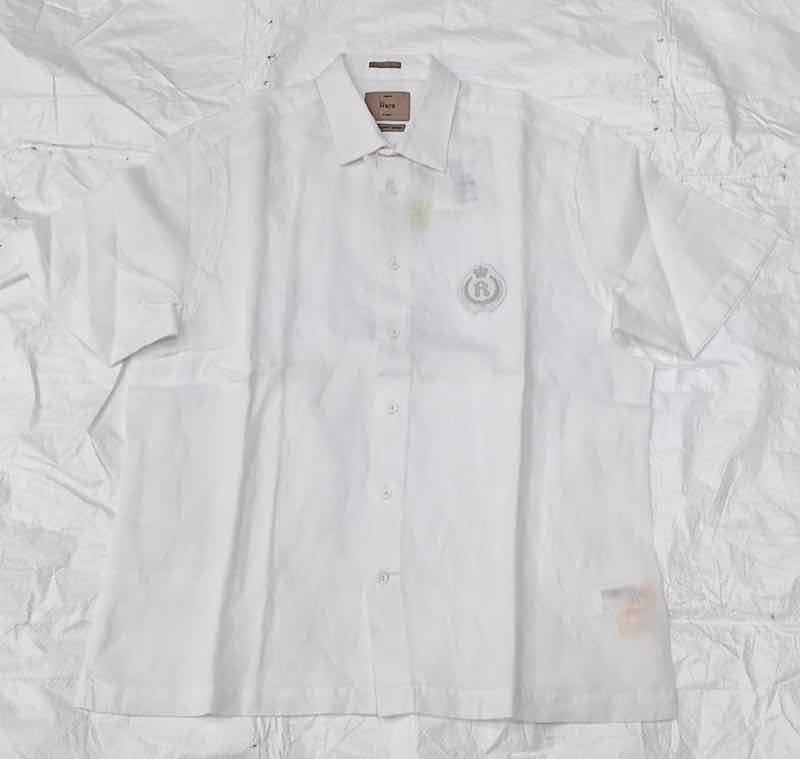
The shirt pictured with this article is a white half-sleeve shirt with a small embroidered crest on the chest. It is a useful reminder that white has a relaxed register too. A crest or chest emblem moves a shirt firmly into casual territory: it belongs with chinos or tailored shorts at a weekend brunch rather than under a jacket at the office.
Half sleeves themselves deserve a fair hearing. In Mumbai's heat they are entirely practical, and many offices accept them. The rule is simply that half sleeves and jackets do not mix, and that they should never be worn with a tie in a formal setting. For days when you need full formality but want to stay cool, choose a lightweight long-sleeved shirt and roll the sleeves neatly once you are at your desk.
Fit: the final test
Because white is so plain, fit is fully exposed. A white shirt that billows at the waist looks careless; one that pulls at the buttons looks strained. Stand side-on to a mirror and look at the back: excess fabric should not gather above the belt in heavy folds. Raise your arms forward; the cuffs should not retreat far up your forearms. Fasten the collar and slide two fingers inside: they should fit comfortably without loose space around the neck.
Whether you prefer slim fit or regular fit formal shirts, the right one is the cut that follows your body without restricting it. Get that right in white and you will understand what a good fit looks like in every other colour.
The one shirt to own
If a man could keep only one formal shirt, it should be white. It suits every complexion, every suit, every season and nearly every occasion, and it improves the look of everything worn with it. Most men find that two or three good white shirts, in poplin, twill and oxford, form the backbone of a wardrobe for years. To see white formal shirts in different fabrics and collars, and to try fits in person, visit Options Mall in Juhu, Vile Parle West.